
Ownership and purpose
Ownership can be individual, corporate or institutional. The ownership chain and the entity’s operating, investment or transaction purpose should be clearly documented.
The Nordic region’s largest economy.
The EU’s leading innovator.
Corporate, fund and capital markets solutions for businesses and investment structures operating in Sweden.
Discuss your Swedish structure
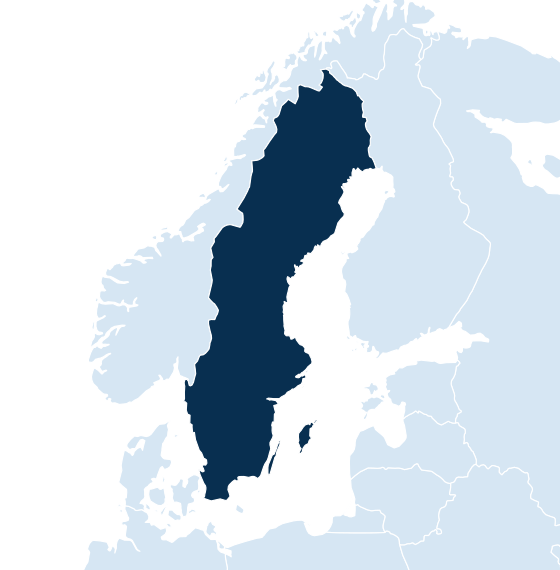

Sweden is the Nordic region’s largest economy and the EU’s leading innovator.
Its open, diversified market combines access to the EU Single Market with close commercial links across the Nordics and a long record of building internationally successful companies.
Sweden ranked first in the 2026 European Innovation Scoreboard. Exports are equivalent to around 50% of GDP, with foreign-owned companies generating half of that value. Its strengths include skilled people, private-sector investment, digital infrastructure and collaboration between business and research—supporting technology, advanced manufacturing, life sciences, energy and defence.
The appropriate structure depends on the planned activities, assets, people, duration, risk profile and tax or regulatory position.
| Your objective | Common structure | Typically used for | Key considerations |
|---|---|---|---|
| Establish long-term business operations | Swedish limited company (AB) | Trading, employing people, entering contracts and maintaining a permanent Swedish presence | Separate legal entity; minimum share capital; board and residency requirements; accounting, tax and annual reporting |
| Hold assets or support a transaction | Swedish SPV, usually an AB | Capital-markets transactions, financing, acquisitions, joint ventures, real estate and other asset-holding structures | Purpose-specific governance; substance; financing documents; tax position; accounting and ongoing administration |
| Establish a fund or pooled investment structure | AB, limited partnership (KB) or regulated fund structure, depending on purpose | Collective investment, private capital and other fund or investment arrangements | Investor profile; investment strategy; regulatory classification; management and administration; tax treatment |
| Extend an existing foreign business into Sweden | Swedish branch (filial) | Conducting Swedish operations directly through a foreign company | Not a separate legal entity; parent remains liable; branch registration, management, bookkeeping and tax obligations |
| Conduct limited or project-based activities | Foreign company without a Swedish entity | Swedish contracts, projects or activities that may not require incorporation | VAT, F-tax and employer registrations; permanent establishment; branch-registration risk; payroll and reporting obligations |
An SPV describes the vehicle’s purpose, rather than a separate Swedish legal form. In practice, many Swedish SPVs are established as limited companies.
For temporary hiring or early market entry, an Employer of Record or foreign-employer arrangement may also be considered before establishing a local entity. Its suitability depends on duration, control, cost and permanent-establishment risk.
From Decision to Operational Readiness
Establishment goes beyond incorporation. The structure, governance, registrations and operating framework must work together from the outset.
Activities, assets, people and duration
Select the company, SPV, fund or other presence
Complete KYC, ownership and governance planning
Incorporate or register the structure
Arrange banking and complete tax registrations
Put accounting, payroll and ongoing compliance in place
Whether establishing an operating company or a purpose-built SPV, the same core legal requirements apply. Governance, ownership, capital and banking arrangements should also reflect what the entity will actually do.
Ownership can be individual, corporate or institutional. The ownership chain and the entity’s operating, investment or transaction purpose should be clearly documented.
A private Swedish AB requires minimum share capital of SEK 25,000. An SPV’s wider capital and financing structure will depend on its assets and purpose.
Board composition must meet Swedish legal and residency requirements. It should also provide governance appropriate to the entity’s activities and risk profile.
Every Swedish company requires a registered office in Sweden. Additional address or process-agent arrangements may be needed depending on the structure or transaction.
The company must be registered with the Swedish Company Office (Bolagsverket) and, where applicable, its beneficial owners reported. Tax registrations are handled separately.
Banks and service providers will review the ownership chain, source of funds, business purpose and expected transactions. SPVs may require transaction-specific documentation.
Accounting, audit and annual obligations are covered under Operating and Remaining Compliant.
Swedish registration requirements depend on the entity’s actual activities. A Swedish SPV may not require every tax registration, while a foreign company can have Swedish obligations without establishing a local entity.
Swedish companies are generally subject to Swedish corporate income tax. Foreign companies may also become taxable where their activities create a permanent establishment.
The requirement depends on the entity’s transactions and where supplies are made. Holding, financing and other SPV activities may require separate VAT analysis.
F-tax is particularly relevant where a company performs work or provides services in Sweden. It is separate from VAT registration.
Required where the entity employs or pays personnel in circumstances creating Swedish withholding and reporting obligations.
VAT, F-tax and employer registration serve different purposes. Having one does not automatically cover the others.
Document board and shareholder decisions and maintain corporate records throughout the year.
Update directors, signatories, ownership, registered office and other registered information when required.
Prepare the annual accounts, complete any required audit and hold the AGM within six months of the financial year-end.
File the adopted annual report with Bolagsverket within seven months of the financial year-end.
Submit the corporate income-tax return, VAT returns and other applicable filings according to the entity’s tax schedule.
Swedish entities are used for more than local business operations. Depending on their purpose, they can hold assets, support investments and acquisitions, or form part of wider financing and capital-markets arrangements.
For international businesses expanding across the Nordics, Sweden often serves as a regional operating base or headquarters. It is the region’s largest economy, while Stockholm provides an established centre for technology, investment and financial services, with close commercial links to Denmark, Finland and Norway.
The Nordics are closely connected, but they are not one legal market. Sweden, Denmark and Finland are EU members, while Norway participates through the EEA; company law, tax, employment, reporting and currency arrangements also remain national.
The right Nordic corporate structure depends on where operations, people, assets, financing and investors are located. Businesses and investment structures may therefore combine a Swedish operating or holding company with local entities, branches or purpose-built investment and transaction vehicles elsewhere in the region.
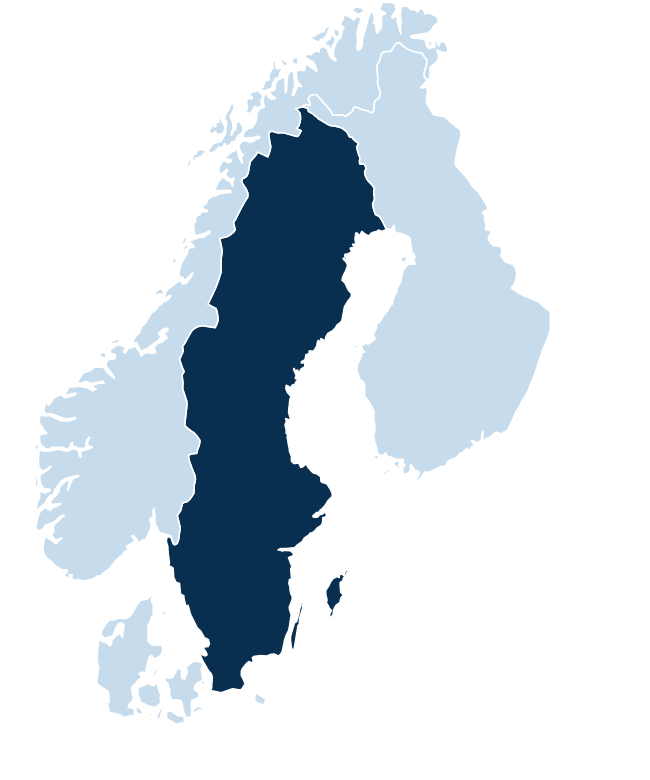
Practical guidance for businesses and investment structures establishing, governing and operating in Sweden.
Yes. A Swedish private limited company can be wholly owned by a foreign company or investor. Foreign-investment screening may apply where the Swedish business carries out protected activities.
The minimum share capital for a private Swedish AB is SEK 25,000. A public limited company requires at least SEK 500,000.
A Swedish-resident director is not generally required. Under the main rule, at least half of the board members and deputy board members, and any managing director, must reside within the EEA; exemptions may be available. If all board members live outside Sweden, the company must appoint a process agent (Swedish-resident representative to receive service of process).
A Swedish AB is a separate legal entity with limited liability, while a branch forms part of the foreign parent company, which remains directly responsible for its obligations. The appropriate choice depends on the intended activities, duration, governance, risk and tax position.
Yes. Swedish ABs are commonly used as SPVs for acquisitions, real estate, asset finance, joint ventures and capital-markets transactions. An SPV is defined by its purpose rather than a separate legal form, and its governance, capital and administration should reflect the transaction.
The account does not necessarily have to be with a Swedish bank. When incorporating with cash share capital, Bolagsverket accepts the required bank certificate from a Swedish or other EEA bank, translated into Swedish. In practice, suitable banking arrangements are usually needed for funding and ongoing transactions and remain subject to KYC approval.
Depending on its activities, a Swedish or foreign company may require VAT registration, F-tax approval and employer registration. These serve different purposes, and having one does not automatically cover the others. The company’s corporate-income-tax and permanent-establishment position should also be considered.
A private AB must appoint an auditor if it exceeded the same two of the following thresholds in each of its last two financial years: more than three employees on average, a balance-sheet total above SEK 1.5 million, or net turnover above SEK 3 million. Public companies, certain regulated businesses and qualifying parent companies are subject to additional requirements.
F-tax approval shows that a business is responsible for paying its own preliminary tax on income from work. For foreign companies performing work in Sweden, the absence of F-tax may require the payer to withhold 30% from the payment unless the Swedish Tax Agency decides otherwise. F-tax is separate from VAT and employer registration.
If a Swedish company has no authorised representative resident in Sweden, it must appoint a Swedish-resident special service recipient to receive formal service on its behalf. The appointment is registered with Bolagsverket and does not give the recipient authority to manage or sign for the company. A process agent may also be required contractually in financing or other cross-border transactions.

Areta combines hands-on Swedish expertise with a wider Nordic perspective. We support international businesses, investors and transaction parties through the establishment, governance and ongoing administration of Swedish companies and SPVs.
Clients work directly with experienced professionals who understand how Swedish requirements interact with cross-border ownership, financing and investment structures.
We can help you select the right structure and put the necessary governance and corporate infrastructure in place.
Talk to our Sweden team